If you hold a professional license in Alabama, or you are applying for one, the licensing process is more legally complex than most people expect. Alabama operates through dozens of independent licensing boards, each with its own rules, application procedures, disciplinary standards, and hearing processes. A licensing dispute can threaten your livelihood overnight.
Our Alabama licensing lawyer at Bachus, Brom & Taylor, LLC has handled administrative law and licensing matters across Alabama for more than 20 years. We represent professionals, businesses, and organizations in licensing applications, disciplinary proceedings, and appeals before state regulatory boards. Contact our firm if you need a licensing attorney in Alabama who understands administrative law and the regulatory landscape.

Licensing cases are administrative law cases. They are governed by the Alabama Administrative Procedure Act, found at Code of Alabama § 41-22-1 through § 41-22-27, and they play out before regulatory boards rather than in traditional courtrooms. Not every attorney is comfortable in that environment.
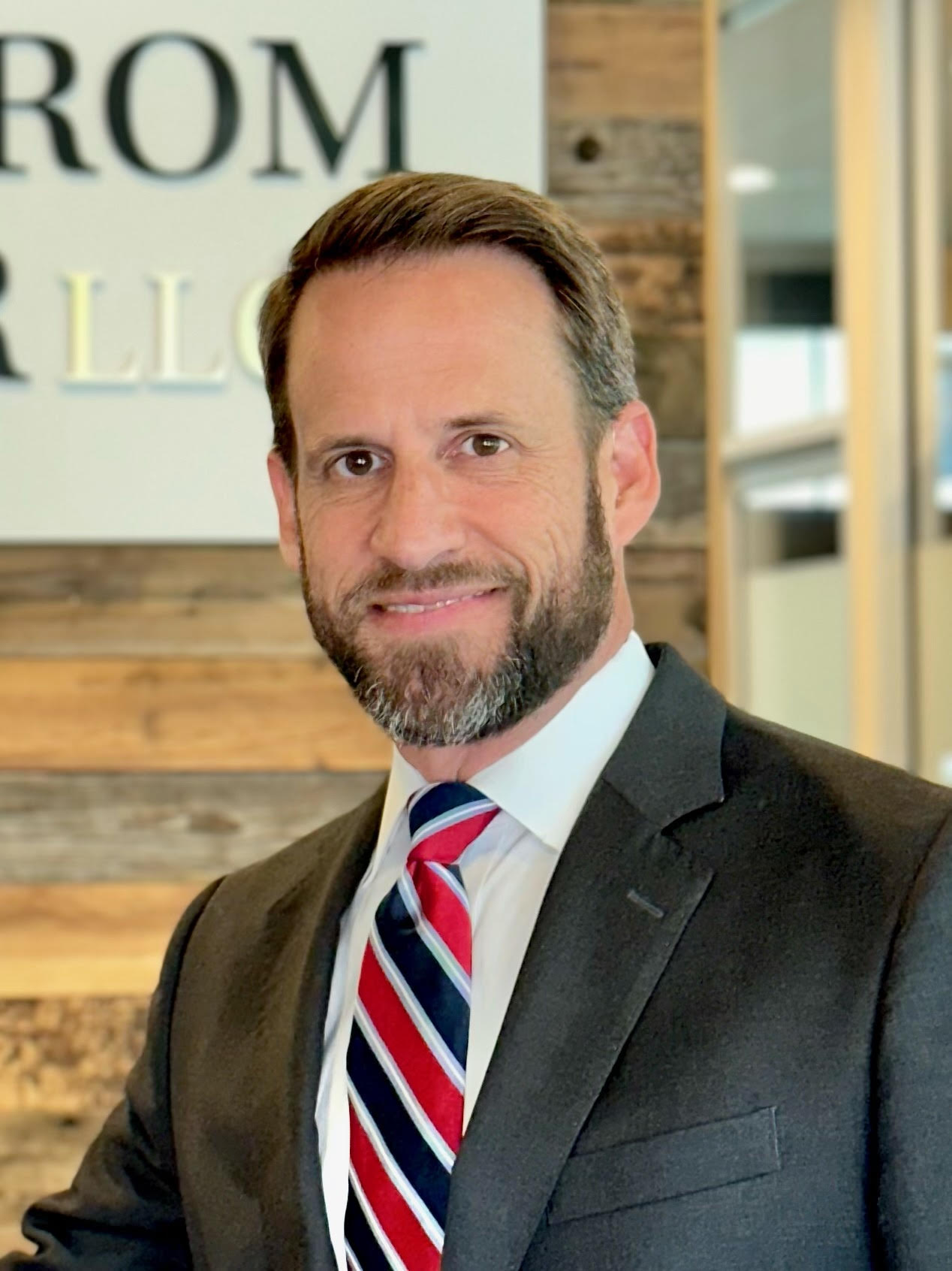
Steven M. Brom practices administrative law and litigation as one of his primary areas of focus. He also handles corporate governance, local government and municipal law, and public policy work. Steven earned his J.D. from the University of Colorado School of Law in 2001 and holds admissions to the Alabama State Bar, the Georgia State Bar, the U.S. District Courts for the Northern, Middle, and Southern Districts of Alabama, the U.S. Court of Appeals for the Eleventh Circuit, and the Supreme Court of the United States. His background in both administrative proceedings and commercial litigation gives him the ability to navigate the procedural requirements of licensing boards while building persuasive factual arguments on behalf of clients.
Bryan M. Taylor adds a unique perspective to licensing matters through his experience in government service. As a former Alabama State Senator who served in senior positions across three gubernatorial administrations, Bryan understands how state agencies operate from the inside. He earned his law degree from the University of Texas School of Law in 2001 and is licensed in both Alabama and Texas.
Our firm has helped clients across Alabama for over two decades. We have the background in regulatory compliance and administrative advocacy that licensing cases demand.
Alabama maintains more than 40 professional and occupational licensing boards, covering professions ranging from medicine and engineering to general contracting and real estate. Each board has statutory authority to grant, deny, suspend, or revoke licenses. Each board also has its own procedural rules for hearings and appeals. We understand how to work within these systems effectively, and we know where the pressure points are when a client’s license is at risk.
A licensing dispute is a direct threat to your ability to earn a living. We approach every case with that reality in mind. Whether the issue is a denial, a disciplinary complaint, or a suspension, our goal is to resolve the matter as favorably and efficiently as possible while protecting the client’s professional reputation and standing.
⭐⭐⭐⭐⭐ “Mr Taylor has provided legal oversight and assistance with legal matters for my medical practice for several years. They are very knowledgeable, helpful, professional, and punctual. I would highly recommend this firm.” – William Hudson
Read more reviews on our Google Business Profile.

Professional and occupational licensing touches nearly every industry in Alabama. Our firm represents individuals and businesses across a range of licensing matters. These are some of the most common.

Alabama’s professional licensing framework is decentralized. Each licensing board operates under its own enabling statute, with oversight procedures governed by the Alabama Administrative Procedure Act (AAPA). Understanding how these two layers interact is essential for anyone involved in a licensing matter.
Under the AAPA, a licensing board must provide notice and an opportunity to be heard before taking adverse action against a licensee. Section 41-22-12 requires agencies to follow specific procedures for contested cases, including the right to present evidence, cross-examine witnesses, and be represented by counsel. These protections apply to license denials, suspensions, revocations, and other disciplinary actions.
Appeals from final licensing board decisions can be taken to the circuit court under § 41-22-20. The court reviews the board’s decision based on the administrative record, and it can reverse or modify the decision if it finds that the board acted arbitrarily, exceeded its authority, or violated the applicant’s procedural rights. Further appeals can go to the Alabama appellate courts.
Alabama also requires many professionals to complete continuing education as a condition of license renewal. Failing to meet these requirements, even inadvertently, can result in license suspension. Each board sets its own CE requirements, and the deadlines and credit hours vary significantly across professions.

When a licensing board files a formal complaint against a licensee, the matter proceeds through an administrative hearing that resembles a trial in many ways. Witnesses testify under oath. Evidence is admitted according to rules that, while less formal than courtroom procedures, still carry significant weight. The hearing officer or board panel issues findings of fact and conclusions of law. Having a licensing attorney in Alabama who is comfortable in these proceedings makes a substantial difference in outcomes.
Licensing investigations and disciplinary proceedings can become public, and even an unfounded complaint can damage a professional’s reputation. We work to resolve matters early and discreetly whenever possible. When public proceedings are unavoidable, we prepare our clients to present their case in a way that preserves their credibility and professional standing. Many of the same strategies we use in managing reputational risk during business disputes apply directly to licensing defense.
Some of the most contentious licensing disputes involve allegations that a professional practiced outside the scope of their license. These cases require a detailed understanding of the statutory boundaries of each profession and the regulatory interpretation of those boundaries. A licensing lawyer in Alabama must be able to argue both the letter of the law and the practical realities of professional practice.
Certain licensing violations can also constitute criminal offenses. Practicing without a license, for example, is a crime in many professions under Alabama law. We coordinate with criminal defense resources when a licensing matter carries potential criminal consequences, and we advise clients on how actions taken in one proceeding can affect the other.
Losing a license does not always mean the end of a career. Alabama licensing boards generally allow petitions for reinstatement after a revocation or suspension period. The requirements vary by board, but the process typically involves demonstrating rehabilitation, completing additional education or training, and satisfying any conditions the board imposed. We guide clients through reinstatement proceedings and help them rebuild their professional lives, much as we help businesses navigate asset protection strategies.
For professionals who hold both state and federal credentials, an Alabama licensing action can trigger consequences at the federal level. Healthcare providers, for example, may face exclusion from federal programs following a state disciplinary action. We help clients understand and manage these collateral consequences.
Your professional license represents years of education, training, and career investment. When it is at risk, you need an Alabama licensing attorney who understands administrative law and knows how to navigate the regulatory system effectively.
Our attorneys at Bachus, Brom & Taylor, LLC have the experience and the legal background to handle licensing matters at every stage. Contact us to discuss your situation and learn how we can help protect your license and your career.

Professional licensing now reaches a large share of the workforce. The U.S. Bureau of Labor Statistics reported that 21.6% of employed Americans held an occupational license in 2024, a figure that climbs above 30% among professional and managerial workers. In Alabama, that demand runs through dozens of independent boards, and the Board of Nursing alone oversees close to 100,000 nurses, the state’s single largest licensed profession. For the people behind those numbers, a license is not paperwork. It is the legal authorization to earn a living, which is why a board’s decision carries such weight.

Most licensees never expect to hear from their board. When discipline does come, it usually traces back to a familiar set of triggers, and many of them are avoidable with attention and prompt advice. Knowing the common ones helps you steer clear of trouble and recognize when a routine inquiry has turned into something more serious.

We represent professionals and businesses before the state’s licensing boards, in applications, disciplinary cases, denials, and reinstatement. The work is administrative advocacy, distinct from ordinary commercial litigation, and it follows agency rules rather than courtroom procedure.
It depends on the stage. Answering a board inquiry costs far less than defending a full disciplinary hearing or carrying an appeal through circuit court. We explain the likely fees after reviewing the complaint or the board’s notice, so the cost is clear from the start. Where the work can be scoped narrowly, we say so.
Do not rush out a response on your own. Anything you write can be used against you, and an early misstep is hard to undo. Speak with a lawyer first, then submit a measured, well-documented answer within the deadline the board has set.
You can. But boards apply procedural rules, and your livelihood is at stake. Many licensees who begin alone bring in counsel once an inquiry turns into a formal hearing with witnesses and evidence.
It might. Some boards publish their disciplinary actions, and even an unproven complaint can surface. We work to resolve matters quietly where we can, applying the same care we bring to protecting business interests in other settings.
Yes. A final board decision can be challenged in circuit court and, after that, on appellate review. The reviewing court studies the board’s record for legal error or an overreach of authority. It does not retry the facts from scratch.
Boards operate under their own enabling statutes and the state’s regulation and administrative procedures. They must give notice and a hearing before serious action, yet they hold wide discretion, which is why the record a licensee builds early matters so much.
Often, yes. Many matters end in a consent agreement before any hearing, much the way commercial disputes settle short of trial. We negotiate terms that protect the license and limit what ends up on the public record.
Usually. A current contractor license is a prerequisite for much government contracting and state contracting work in Alabama, and letting it lapse can sink a bid or invite penalties.
It can. A professional who also holds federal credentials, or who pursues federal contracting, may face separate fallout from a serious state sanction, including exclusion from federal programs for some healthcare providers.
It unfolds before a board rather than a jury, under looser evidence rules but with consequences just as real. There is no broad discovery, the timeline belongs to the board, and the panel often includes members of your own profession. The advocacy still draws on the same discipline behind effective commercial litigation strategies, redirected to an administrative forum.
Yes. Companies juggle permits, registrations, and regulatory approvals that connect to the broader commercial law governing their operations. A single missed authorization can stall a project or expose the business to penalties.
Sometimes. Many boards permit a petition for reinstatement once a set period has passed, conditioned on rehabilitation, added training, or other terms. We prepare these petitions and present the strongest case for restoring the license. Timing matters here, since petitioning too early can hurt more than waiting.
Send us the board’s letter or your application materials. We will identify the deadline, walk through your options, and move quickly, since licensing timelines seldom leave much room to wait.

Most licensing matters never reach a courtroom. They are decided by the professional board that issued the license, through an administrative process the board itself conducts. A licensee who loses can ask the circuit court to review the decision, and from there the state’s appellate courts. Because each Alabama board writes its own procedural rules, the path, the deadlines, and the decision-makers all change with the profession involved. What works before one board can be a misstep before another, which is why familiarity with the specific agency matters.
Every profession answers to its own board. A few of the state’s larger boards are listed below.
We share these contacts to help you reach the right office. We do not represent these boards, and listing them here is not an endorsement.
Bachus, Brom & Taylor, LLC represents licensed professionals and businesses before Alabama’s regulatory boards. Partner Bryan M. Taylor served as an Army JAG officer in the Alabama National Guard and earned the Bronze Star Medal, and he brings that discipline to administrative and regulatory matters alongside partner Steven M. Brom. Together they pair courtroom advocacy with the day-to-day regulatory work these cases demand.
⭐⭐⭐⭐⭐ “Professional,knowledgeable, & precise. Helped me navigate a troubling legal time in my life.” – Dylan Barnett
Read more reviews on our Google Business Profile.
A licensing problem puts your career on the line, so the response has to be careful and well-timed. If a board has denied your application, opened a complaint, or moved to suspend your license, our Alabama licensing attorneys can review the notice, explain your options, and deal with the board on your behalf, with fees discussed openly before we begin. Board deadlines are firm, so it helps to reach out soon after you hear from them. Contact us to talk through your situation with a licensing lawyer who knows Alabama’s administrative system.