Trusted estate planning attorneys with over 20 years of experience serving Alabama families.
If you’re trying to plan your estate or settle a loved one’s affairs in Birmingham, our firm can help. Clients come to us to draft wills, build trusts, update outdated plans, move estates through probate, and protect assets from taxes and creditors. Our Birmingham, AL estate planning lawyer handles all of these matters.
Managing Partner Steven Brom has worked on wills, trusts, and probate cases for Alabama families for over two decades. Schedule a consultation with Bachus, Brom & Taylor, LLC to discuss your situation.
 What does estate planning involve?
Estate planning is the process of deciding, in advance, what happens to your property, your healthcare decisions, and your family if you become incapacitated or pass away. The process usually includes drafting a will, designating beneficiaries, choosing who can make medical and financial decisions on your behalf, and in many cases, setting up one or more trusts. A solid plan considers state law, federal tax rules, and the realities of your family and your life.
Without a will, Alabama intestacy laws decide who inherits your property. Those default rules often don’t reflect what families actually want. A well-built estate plan replaces those defaults with your own choices. Done poorly, or skipped entirely, an incomplete estate plan leaves your family at the mercy of court procedures, delays, and avoidable costs. Our Birmingham estate planning attorneys build strategies around the people and assets you actually have, not a generic checklist.
 Our practice covers the full range of estate planning tools used by Alabama families and business owners. Some clients arrive needing a single will. Others need a layered plan that combines trusts, healthcare directives, and business succession provisions. Below are the services we handle most often for Birmingham clients.
Last wills and testaments. A will directs who receives your property, who serves as executor, and who cares for any minor children. We draft wills that hold up under Alabama probate scrutiny and reflect your actual intent.
Living trusts. A revocable living trust lets you transfer assets outside of probate while maintaining control during your lifetime. We use these for clients who want privacy, speed, and continuity after death.
Irrevocable trusts. For asset protection, advanced tax planning, or special needs situations, an irrevocable trust may be the right structure. We walk clients through the tradeoffs before any document is signed.
Trust administration. Once a trust is funded and a grantor passes, the trustee has duties under Alabama law. We advise trustees through distributions, accountings, and beneficiary communications.
Probate matters. When a loved one dies with or without a will, the estate often must move through probate court. Our firm represents executors, administrators, and beneficiaries during this process.
Powers of attorney. A durable power of attorney lets a trusted person handle financial decisions if you become unable to. We draft both general and limited powers based on each client’s circumstances.
Healthcare directives. A living will and healthcare power of attorney let you state your medical preferences and name someone to speak for you when you cannot. These documents matter long before they are ever used.
Beneficiary designations and digital asset inventories. Retirement accounts, life insurance, and online assets pass outside a will. We coordinate beneficiary forms with the rest of the plan so nothing is left to chance.
Estate tax planning. Larger estates face federal estate tax exposure. We work with clients to structure gifts, trusts, and ownership in ways that reduce tax burden where legally appropriate.
Will contests and asset protection. When a family member challenges a will, or when creditors threaten an inheritance, we step in to defend the plan you put in place.

 Choosing the right attorney to draft your estate plan or guide your family through probate is essential.
Managing Partner Steven Brom has practiced law in Alabama since 2001. His work covers estate planning, probate, and trusts alongside corporate governance and commercial matters. He earned a Bachelor of Arts in History from the University of Georgia and a Juris Doctor from the University of Colorado. He is admitted to the Alabama State Bar, the Birmingham Bar Association, and the U.S. Court of Appeals for the Eleventh Circuit. Our firm has served as an estate planning lawyer in Birmingham, AL for over twenty years.
Every estate plan we draft starts with a conversation about your goals, your family, and your assets. There is no template-first approach. We handle straightforward wills, blended-family arrangements, business owner succession plans, special needs trusts, and probate disputes with the same care and attention. Our practice serves clients across Jefferson County, Shelby County, and the surrounding Birmingham metro area, including family business owners, retirees, young families, and individuals managing inherited assets. We also coordinate with accountants, financial advisors, and other professionals when the plan calls for it.
 Key Estate Planning Documents and What They Do
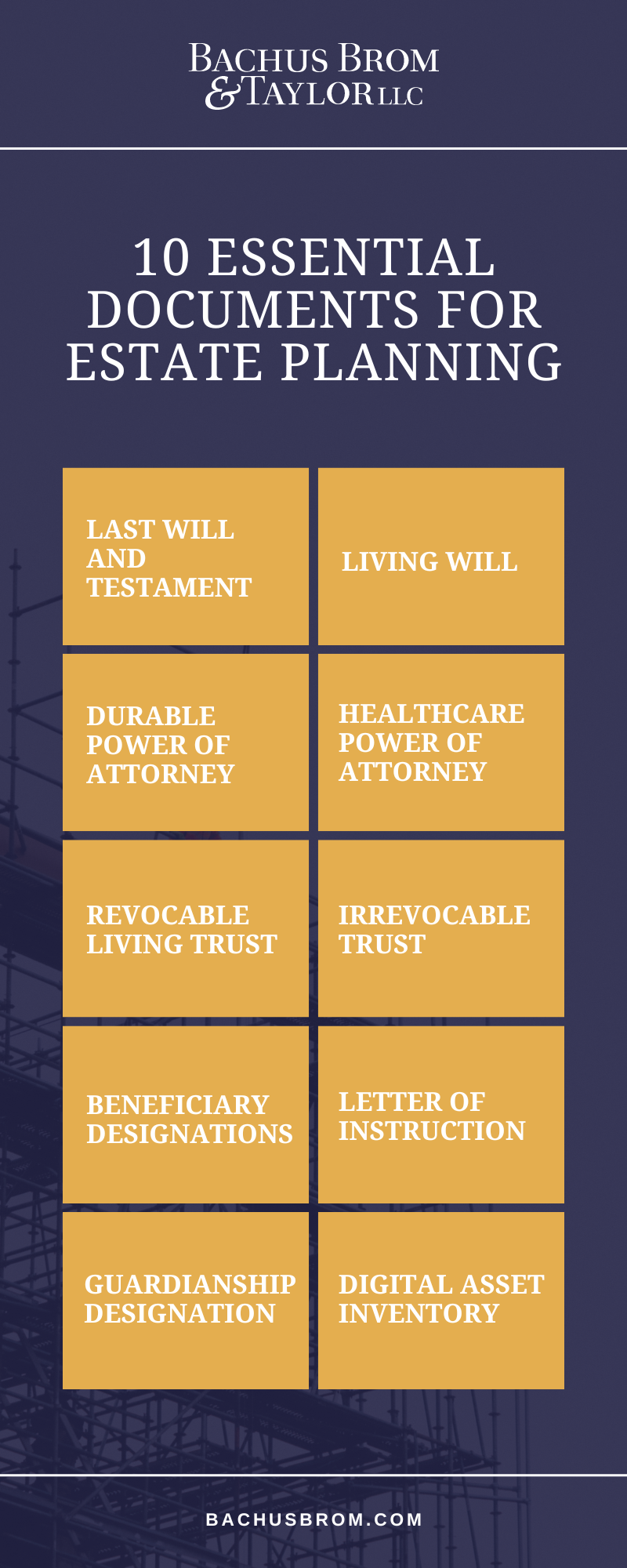
Most Alabama estate plans use some combination of the following documents. Each plays a different role, and the right mix depends on your situation.
A last will and testament directs property at death and names guardians for minor children.
A revocable living trust holds and transfers assets without going through probate.
A durable power of attorney authorizes financial decision-making if you become incapacitated.
A healthcare power of attorney names a medical decision-maker.
A living will states your wishes about life-sustaining treatment.
Beneficiary designations on retirement and insurance accounts pass funds outside the will.
Letters of instruction provide guidance to executors and family members on personal wishes.
Choosing among these documents and combining them into one cohesive plan is the substantive work of an estate planning attorney. A well-drafted will alone is not always enough. Many Alabama families benefit from at least one trust paired with both financial and healthcare powers of attorney.
Several factors shape every plan we draft. Your asset portfolio, family situation, charitable goals, business interests, and concerns about long-term care all influence the right structure. Plans for new parents look very different from plans for retirees with grown children. Blended families often need precise drafting to prevent later disputes among siblings.
Some areas we routinely address include:
Guardianship designations for minor children
Trust funding decisions and asset retitling
Business succession for owners and partners
Updating beneficiary designations across all accounts
Each of these areas changes how the documents are drafted. A guardianship clause for a five-year-old looks different from one for a teenager with special needs. Trust funding involves retitling accounts and deeds, and missed steps here are a common source of probate complications later.
Most straightforward plans move from first meeting to signed documents within a few weeks. Larger or more involved plans take longer. A typical sequence:
Initial consultation to review your goals, assets, and family situation
Document drafting and internal review
Client review and revisions
Signing meeting with proper witnessing and notarization
Funding of any trusts and updates to beneficiary forms
Probate matters operate on a different schedule. Alabama probate timelines depend on the size of the estate, and whether any disputes arise among beneficiaries or creditors. Some estates close within six months. Others take a year or longer, particularly when contested wills, complex assets, or out-of-state property are involved.
Coming prepared helps us give you a clear picture during the first meeting. Bring the following if available:
A list of your real estate, financial accounts, and significant personal property
Current beneficiary designations on retirement accounts and life insurance
Any existing will, trust, or power of attorney documents
Notes on family members, children’s ages, and any special needs concerns
Business ownership information, if applicable
After the consultation, we provide an outline of what your plan should include and the next steps. Most clients leave the first meeting with a clear sense of direction. If you’re not sure what documents apply, bring what you have. We can identify the gaps.
 Estate planning intersects with state probate procedure, federal tax law, and healthcare regulations. The resources below may help you start your own research. None of them replaces legal advice on your specific situation. Use them as a starting point for context and to verify the basics.
The Alabama State Bar publishes attorney information and ethical standards.
The Alabama Code Title 43 contains the probate code and intestate succession statutes.
The IRS estate tax page explains current federal exemption amounts and filing requirements.
The NIH advance directive guide covers healthcare planning documents.
The Social Security Administration provides information on survivor benefits and related filings.
The Library of Congress wills guide offers research on estate document fundamentals.
Our blog covers Alabama estate tax considerations and advanced strategies like the beneficiary defective inheritor’s trust.
Every Alabama estate is different, and the right structure depends on facts only you and your attorney can know.
Whether you’re just starting to think about a will, settling an estate, or revisiting an older plan, our firm is ready to help. Contact us to schedule a consultation with Bachus, Brom & Taylor, LLC. We’ll discuss your situation, walk through the planning options, and outline the next steps. Our attorneys respond promptly and meet with clients throughout the Birmingham area.

Birmingham sits within Jefferson County, the most populous county in Alabama. The county’s aging population, high rate of homeownership, and large number of households all point to a broad and ongoing need for estate planning.
Estate planning is not limited to the wealthy or the elderly. Anyone who owns property, has children, or holds accounts with named beneficiaries has an estate to direct.
Nearly one in five Jefferson County residents, about 18.7 percent, is 65 or older, according to the Census Bureau.
The county contains roughly 269,900 households, each representing a family or individual with decisions to make about the future.
About 64 percent of homes in the county are owner-occupied, with a median value near $240,000. Real property of that kind typically must be addressed in a will or trust.
Nearly 29,000 veterans live in Jefferson County, a group that often has survivor benefits and burial arrangements to coordinate within a plan.
 Choosing the attorney who will draft your plan is an important decision. A short conversation reveals a great deal about whether a lawyer is the right fit. Consider asking the following before you commit.
How long have you practiced estate planning in Alabama? State law governs wills, trusts, and probate, so local experience matters. Ask how much of the practice is devoted to estate work.
Will you handle my matter personally? You should know who drafts your documents and who answers your questions after signing. Continuity matters over the life of a plan.
Do you recommend a will, a trust, or both for my situation? A thoughtful answer depends on your assets and family. Be cautious of a one-size-fits-all recommendation.
How do you charge for your services? Ask whether the work is billed at a flat rate or hourly, and what future updates cost. Clear fee expectations prevent misunderstandings.
How will you help fund my trust? A trust that is never funded provides little benefit. The attorney should explain how accounts and deeds are retitled after the documents are signed.
What happens if my circumstances change? Marriage, children, a new business, or a move can all require updates. Ask how the firm handles revisions over time.
Who will guide my family through probate if needed? Even with a plan, some estates pass through court. It helps to know the same firm can assist your executor later.
 Who needs an estate plan?
Almost every adult benefits from at least a basic estate plan. If you own a home, have minor children, hold retirement or bank accounts, or want a say in your medical care, you have reasons to plan. Without documents in place, Alabama law makes those decisions for you.
Cost depends on the complexity of your plan. A straightforward will costs less than a plan built around one or more trusts, business succession, or tax strategies. We explain the fee structure at the first meeting so you can decide what fits your needs and budget.
Many Alabama families use both. A will directs property and names guardians, while a trust can hold assets, avoid probate, and provide for beneficiaries over time. The right combination depends on your assets, your family, and your goals.
Alabama’s intestacy statutes decide who inherits and in what shares, and the court appoints an administrator. Those default rules may not match your wishes, and the process is often slower and more expensive for your family. A valid will replaces those defaults with your own instructions.
Review your plan every few years and after major life events. Marriage, divorce, a birth, a death, a significant change in assets, or a move to another state can all call for revisions. An outdated plan can be as problematic as no plan at all.
Alabama imposes specific signing and witnessing requirements for a valid will. Handwritten or online documents often fail to meet them, which can render a will unenforceable. Having an attorney prepare and supervise the signing helps ensure the document holds up.
A durable power of attorney lets a trusted person manage your finances if you become unable to. A healthcare power of attorney names someone to make medical decisions. Without these, your family may have to seek guardianship through the court, which takes time and money.
Choose someone trustworthy, organized, and willing to serve. The role carries real responsibility, and a successor trustee has duties under Alabama law from the moment they accept it. Naming a backup is wise in case your first choice cannot serve.
In certain circumstances, yes. When a trustee mismanages assets or breaches their duties, beneficiaries may petition the court to remove a trustee. Clear drafting and a well-chosen trustee reduce the odds of that kind of dispute.
Several tools can help, including living trusts, joint ownership, and beneficiary designations on accounts. Each carries tradeoffs, and the right approach depends on your assets. We review which options fit your situation and coordinate them with the rest of your plan.
Without a plan, a business interest can pass through probate and stall operations. Business owners often use buy-sell agreements, trusts, and succession provisions to keep the company running and control who takes over.
Yes. Estate planning is about more than taxes or wealth. It names guardians for your children, appoints decision-makers if you are incapacitated, and spares your family avoidable delay and expense. Modest estates benefit from planning just as larger ones do.
 Jefferson County Probate Court
Estate matters in the Birmingham area are handled by the Probate Court of Jefferson County, which sits in both the Birmingham and Bessemer divisions. The court oversees the probate of wills, administration of estates, guardianships, conservatorships, and the settlement of trusts. You can learn about filings and procedures through the Jefferson County Probate Court.
A certified death certificate is required to open an estate. In Alabama, those records are issued through the Alabama Department of Public Health, which maintains the state’s vital records. Knowing where these documents come from helps an executor begin without delay.
Several organizations assist Birmingham-area families with planning and elder-law needs, particularly for older adults and those with limited income. The following may be helpful alongside legal counsel.
Alabama AgeLine, 1-800-243-5463, is the Alabama Department of Senior Services program that helps residents age 60 and older with wills, estates, and related legal matters.
Eldercare Locator, 1-800-677-1116, connects older adults and caregivers to local aging services nationwide.
Legal Services Alabama, 1-866-456-4995, provides free civil legal aid, including simple wills, to eligible low-income Alabamians.
These listings are provided for general information only. Bachus, Brom & Taylor, LLC does not endorse or take responsibility for any outside organization, and inclusion here is not a recommendation.
Bachus, Brom & Taylor, LLC has served Alabama families and businesses since 2001, with estate planning, probate, and trusts at the center of the practice. Managing Partner Steven M. Brom holds an AV Preeminent rating from Martindale-Hubbell, its highest peer rating for legal ability and ethics, and was named to the Alabama Rising Stars list by Super Lawyers. He is admitted to practice before all three federal district courts in Alabama and the Supreme Court of the United States. The firm’s estate planning attorneys draw on that background to build plans for individuals, families, and business owners across the Birmingham metro area.
3125 Blue Lake Dr Ste 101, Birmingham, AL 35243
★★★★★
“Professional, knowledgeable, & precise. Helped me navigate a troubling legal time in my life.”
Dylan Barnett
Read more reviews on our Google Business Profile.
 A sound estate plan protects your family and gives you control over what happens to your property and your care. Our Birmingham estate planning lawyers will review your situation, explain the documents that fit your goals, and prepare a plan that reflects your wishes. Consultations are confidential, and we explain fees before any work begins. Reach out to Bachus, Brom & Taylor, LLC to discuss your estate planning needs with an attorney who serves families throughout Birmingham, AL.